


24 Hours In Genoa

Genoa has a marketing problem.
Florence has Michelangelo. Venice has gondolas. Bologna persuades you that eating your own body weight in mortadella is a cultural experience (they’re right).
Genoa, meanwhile, is somewhere many travellers see through a train window or via shuttle bus. A necessary evil on their way to Portofino or Cinque Terre.

This is a mistake.
No, I’m not about to call it a hidden gem but done right, Genoa and the close-by Ligurian coast before you get to the pick-me Portofino crowds is captivating in the extreme. Medieval alleyways housing restaurants where only Italian is spoken, one of Europe's biggest aquariums and lunch halfway up a mountain and an afternoon swim in the Mediterranean can all be accommodated within a flying visit.
Here's my itinerary for spending the perfect 24 hours in Genoa – including a sneaky afternoon escape along the Ligurian coast.
At A Glance
24 Hours in Genoa: Getting to Genoa
By air: Genoa's Cristoforo Colombo Airport is unusually close to the centre. The Volabus connects the airport with both Piazza Principe and Brignole railway stations, taking around 30 minutes, tickets are €10 which includes a 24-hr public transport ticket. A taxi to/from the old town will set you back €25-30…doubtless the card machine will not be working so bring exact cash.
By train: Genoa is well connected to northern Italy, with direct trains from cities including Milan and Turin and up to the French border at Ventimiglia. Genova Piazza Principe is particularly convenient for the historic centre and Porto Antico; Brignole is better for the eastern side of town and trains towards Camogli. Buy tickets in advance on Trenitalia.
24 Hours in Genoa: Getting around Genoa
Don't hire a car for this itinerary. Genoa's historic centre is made for walking while trains make the afternoon trip to Camogli straightforward. If you want to try and find parking anywhere central, may the odds be ever in your favour! If you need a car for a broader roadtrip, I’d recommend Trip.com which aggregates the market for the best deals.
Most of the sites are concentrated so with the exception of the funicular, we didn’t use the public transport network. But if you’re staying further out, AMT (download the app) operates Genoa's buses, metro, lifts and funiculars. A €2 ticket is valid for 110 minutes across the urban network, including the Zecca - Righi funicular, while the €10 daily pass covers 24 hours and also includes regional trains within its specified network and the Volabus airport service.
Where to stay in Genoa
B&B HOTEL Genova Principe: My pick for a short, practical stay: it's just 120 metres from Genova Piazza Principe station, making an early arrival or Camogli excursion particularly easy. Expect clean, very well air-conditioned rooms, typically around €70–110 per night, depending heavily on dates.
Hotel Palazzo Grillo – For caruggi character, stay in the historic centre at this converted Renaissance palazzo, which gives access to the old city and Porto Antico outside your door. Roughly €140–220 per night is a reasonable planning range.
Hotel Bristol Palace – A grander option still near Via XX Settembre, complete with an extraordinary elliptical staircase (trust me you’ll be photographing it) and a location handy for Piazza De Ferrari and Brignole station. It’s not cheap at around €200–300+ per night but if you’re in a splurging mood, this is the one!
24 Hours in Geneva
8am: Breakfast in Piazza di Fossatello
Start your 24 hours in Genoa in Piazza di Fossatello, deep in the historic centre.
This isn't a classic Italian piazza in the grandiose Piazza Navona sense. Nobody designed it for Audrey Hepburn to sweep across on a Vespa. Instead, daily life commences and then accelerates all around you: shutters open, scooters squeeze through VERY improbable gaps and a procession of locals stop for a countertop espresso before disappearing into one of the snaking alleyways.

Yes, it’s a flying visit but take things a little more slowly. Order a cappuccino and pastry at one of the neighbourhood cafés (Border Café is my favourite). If you’re feeling more savoury, Genoa's other breakfast option is a slice of focaccia genovese. Dipping it into your cappuccino is entirely acceptable local behaviour and is honestly better than it sounds.
Then head into the caruggi, those same narrow medieval lanes you see locals strolling down.
9am: Get deliberately lost in Genoa's Old Town
Find Via Garibaldi and then switch Google Maps off. Part of the fun of Genoa – during daylight hours – is getting lost within the city’s medieval street plan. If you see an inviting looking café or store off a side-street trust your instincts!
For those needing a little more structure, this street is where Genoa's former merchant aristocracy engaged in that popular Renaissance sport of competitive palace building.
The UNESCO-listed Palazzi dei Rolli formed part of an unusual system under which the owners of Genoa's grandest homes could be called upon to accommodate visiting dignitaries. The higher the visitor's status, the grander the palace they were assigned…the original game of one-upmanship so popular in medieval Italy.
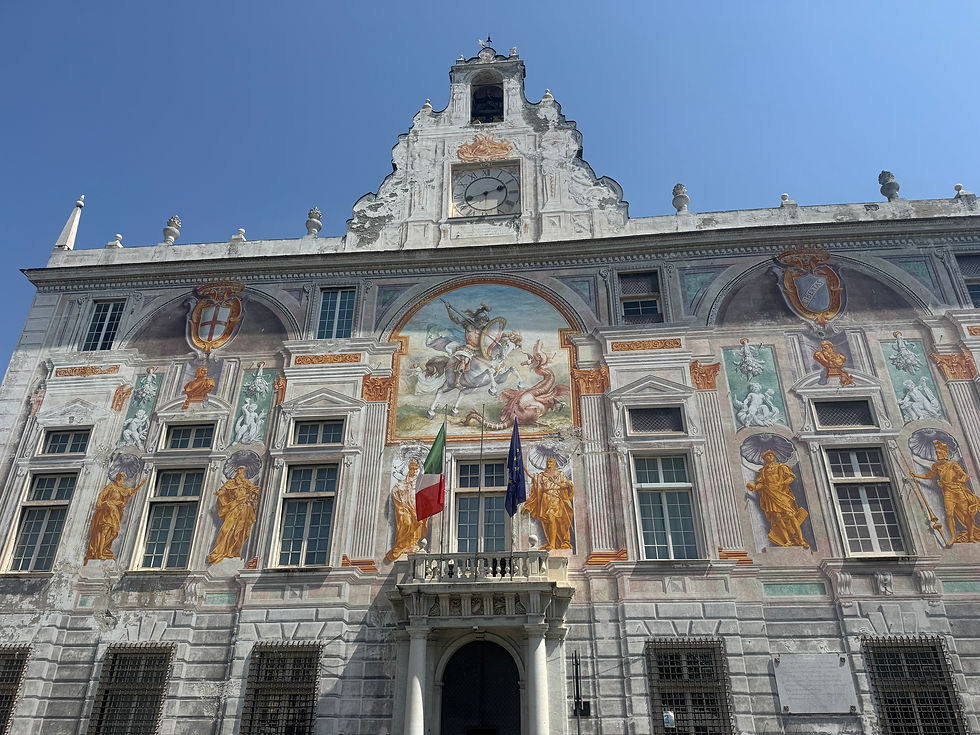
The easiest way to nose around inside today is through the Musei di Strada Nuova, encompassing Palazzo Rosso, Palazzo Bianco and Palazzo Tursi. Even if you're not planning a morning of serious art appreciation, the frescoed rooms, courtyards and terraces justify stepping inside.
Next, plunge back into the caruggi towards Cattedrale di San Lorenzo. Genoa's cathedral is instantly recognisable from its striped black-and-white marble façade, but head inside to see the Chapel of St John the Baptist and one particularly unusual exhibit: a British naval shell that crashed through the cathedral in 1941 but failed to explode.
If you want to explore further with more of a culinary flavour, it’s definitely worth considering an Old Town food tour, which pairs historical produce with Genoa’s famous pesto, pastries and some excellent wine. Plot spoiler – you may find yourself falling behind schedule once you’re finished!
From here, follow the streets downhill towards the waterfront.
11am: Visit the Aquarium
Eventually, the lanes spit you out at Porto Antico, Genoa's old harbour, extensively redeveloped by Genoese architect Renzo Piano. After the narrow caruggi, it suddenly feels spacious and airy.
The star attraction of the port is the Acquario di Genova, the second largest in Europe no less, and this is one place where spontaneity isn't going to do you any favours. Book a timed ticket online in advance, especially at weekends and during school holidays, standing in line under the summer sun won’t be your favourite memory of Genoa.
The aquarium is deceptively enormous, with environments stretching from the Mediterranean to tropical seas and inhabitants including sharks, penguins, manatees, seals and jellyfish. Allow around 1.5 – 2hrs at a reasonable pace.

The floor-to-ceiling tanks of the sharks and manatees invariably draw the biggest crowds – it’s hard not to be taken with a manatee’s sudden barrel roll – but equally impressive are the vast tanks recreating entire marine environments, where rays and shoals of fish circle overhead in a simultaneously colourful and hypnotic experience.
For one of Europe’s largest ports, there's something appropriate about spending part of your 24 hours in Genoa underwater.
1pm: Ride the funicular to Righi (and grab lunch)
The Zecca - Righi funicular is part of Genoa's regular public transport system rather than a tourist attraction, which means the journey costs just €2 with a standard ticket. It’s a ten minute walk from the aquarium to the base station.
As you climb, Genoa's densely packed rooftops begin dropping away beneath you and you start to appreciate the city's peculiar geography of being wedged between the Apennines and Mediterranean. It’s pretty steep!

Once you get to the summit at Righi, wander up to viewing platform for the inevitable photos and then pop next door to Montallegro for lunch.
If it’s been freshly cooked, order a portion of the farinata, a Ligurian speciality made from chickpea flour, water, olive oil and salt, cooked at high heat until thin and crisp around the edges. It’s not as well-known as focaccia but eminently moorish. If you’re not done on the carbs, order their signature metre of pizza to follow (the clamps on the side of the table is to hold it in place!).
Service is top notch and your biggest challenge will be to avoid falling into a food coma.
On which note, spend an hour exploring Parco delle Mura nearby, part of the green belt surrounding Genoa's historic fortifications. You don't need to tackle a major hike – the castle you can see is a 4km walk uphill if you do fancy it; a short walk towards the forts is enough to earn expansive views across the city, port and Ligurian Sea.
3pm: Take the train to Camogli
Descend downhill and catch a regional train from Genova Piazza Principe or Genova Brignole (both are within a ten-minute stroll) to Camogli-San Fruttuoso. Use the excellent Trenitalia app to book, a return ticket costs
Why spend 24hrs in Genoa getting out of the city?
Simply because the – complete - change in scenery is so easy to access and your destination resembles a classic Italian seaside town.

Camogli still feels like a working seaside town rather than a luxury shopping centre with boats attached (trust me Portofino is nice to look at but really isn’t worth it!) Walk downhill from the station and you'll reach a long seafront backed by characteristically tall Ligurian houses painted in shades of ochre, pink and yellow.
Follow the promenade towards the Basilica di Santa Maria Assunta, dramatically perched beside the water, then wander around Camogli's pocket-sized fishing harbour, stopping for a juice, spritz or gelato – or all three, you’re on holiday after all.
The cute independent stores make for a pleasant diversion and if it’s warm, double back for a swim from Camogli Beach. Take note – like most Ligurian beaches, It's pebbly rather than sandy, so water shoes are a sensible addition to your day bag.
If you’re still working off your meter of pizza, climb towards San Rocco di Camogli, where the coastal path rises above town and opens up views across the Golfo Paradiso.
If you are keen to do Portofino (with a swimming stop at the remarkable monastery at San Fruttoso), it’s well worth paying a few more Euro for a private tour. The regular boats give great views all along the coast but goodness, they’re cramped.
Then reward yourself with another Hugo Spritz.
7pm: Return to Genoa for aperitivo
Catch the train back to Genoa, return to your hotel and freshen up.
Then, it’s back to the caruggi, which take on a very different character as dusk falls. Whilst not dangerous, I’d recommend ensuring you can see the end of every side street you walk down as some are not well lit.

Your aperitivo destination is Ostaia Cicala, buried among Genoa's cramped lanes in a small residential square. It’s LGBTQ+ friendly, intimate and the kind of place where all you’ll hear is Italian – no laminated multinational menus here, just order your tipple of choice and people watch. The snacks at the bar cost a mere €1 each so help yourself and it’ll be added to your bill.
Stay for a second drink, you’ve earnt it.
9pm: Dinner at Trattoria da Cicci
A short walk away is Trattoria da Cicci, where your final meal can fill in any Ligurian culinary gaps left by the previous 13 hours. It’s down another side street that we stumbled upon more by luck than judgment…it was so good we returned on our final night for seconds.

Look for trofie al pesto, the twisted pasta traditionally paired with Genoa's most famous export or the fassona beef with rosemary potatos – have it cooked however they recommend it, it’s a proper melt in the mouth experience. If you have any room left, the semifreddo (not being a coffee drinker, I always pass on tiramisu) is surprisingly light.
That said, you’ll still be waddling back home. Or just stop off for one last quick drink. Genoa may just have worked its magic on you.


Comments